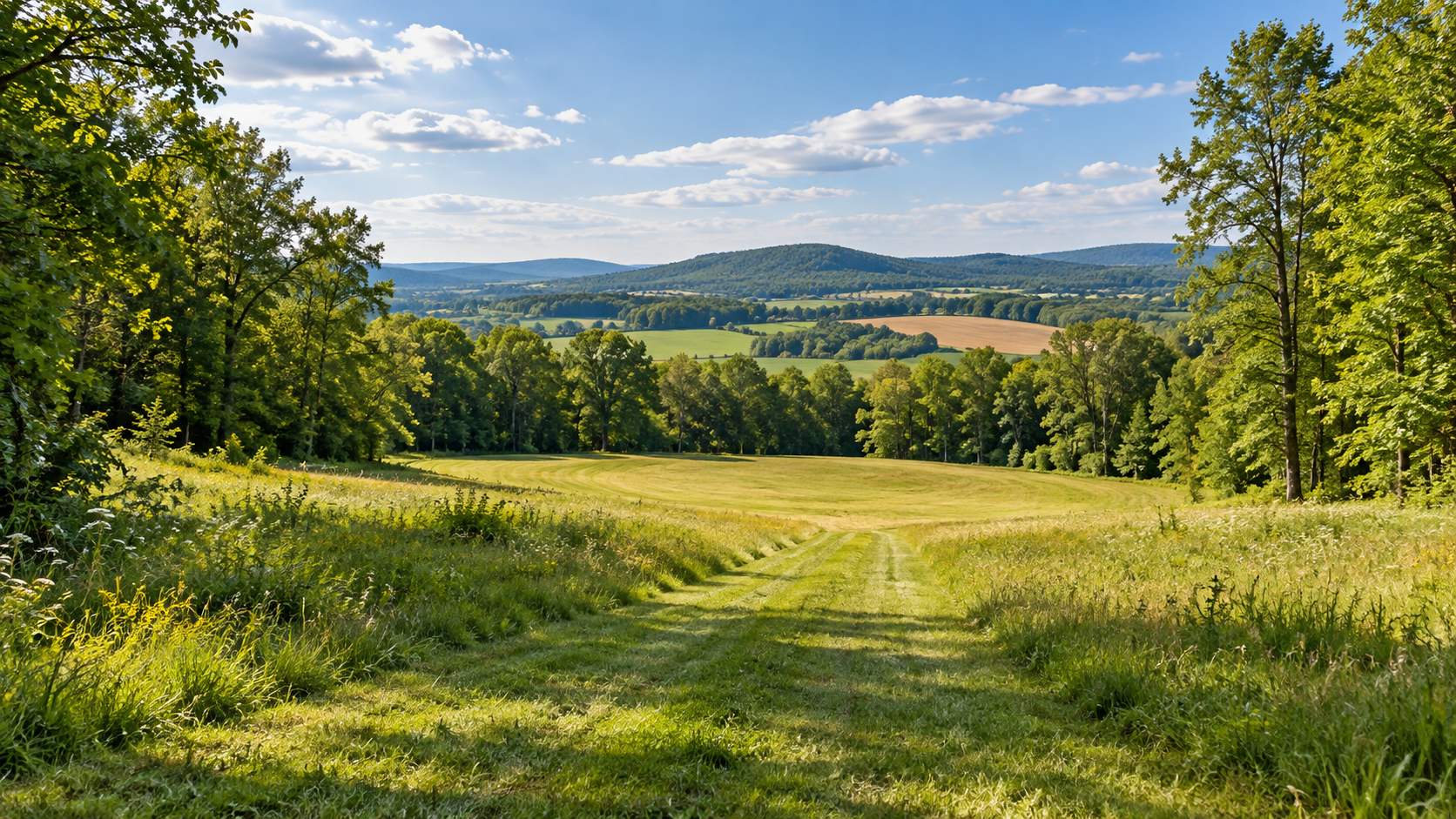
Buying vacant land can be exciting. You may already be picturing a new home, a place for a small farm, or room to build at your own pace. But a parcel that looks perfect on a map may come with limits or costs that aren’t obvious during a quick visit.
Before you make an offer on land in York or Adams County, use these questions to find out what the property can support and what it may take to get it ready.
1. Is the property zoned for what I want to do?
Start with the municipality where the parcel is located. Zoning rules can affect whether you can build a home, operate a business, keep animals, add an accessory building, or use the land in another way.
Ask the local zoning office about the parcel’s current zoning and whether your intended use is allowed. If you hope to divide the property later, ask whether subdivision could be possible and what approvals might be required. Don’t rely on a listing description or a nearby property as proof that your plans will be approved.
2. Does the property have legal access?
A parcel may touch a road, but it’s still important to confirm how you can legally reach it. Ask whether access is from a public road or through a recorded easement. If there is a shared driveway or private road, find out who maintains it, how costs are shared, and whether those responsibilities are documented.
Have the deed and any recorded easements reviewed as part of your due diligence. A path that has been used for years may not, by itself, answer questions about legal access.
3. Can the land support a septic system, if needed?
If public sewer isn’t available, the parcel may need an on-lot sewage system. Ask what records exist for the property and what testing or approvals would be needed for your proposed use. A parcel’s appearance, size, or prior use doesn’t establish that a septic system can be approved in the location you want.
Talk with the municipality’s sewage enforcement officer about the applicable process before you commit to a building plan. Pennsylvania DEP oversees the state’s sewage facilities planning program, while local officials and qualified professionals are involved in the review and permitting process.
4. What are the water options?
Find out whether public water is available at the property or whether a private well would be needed. If a well already exists, ask for available records and test results. If a new well may be needed, speak with qualified local professionals about feasibility, likely costs, and the steps involved.
Water availability can affect both your plans and your budget, so it’s best to investigate early.
5. How close are utilities, and what would it cost to connect?
A utility line nearby doesn’t necessarily mean a connection is simple or inexpensive. Ask the relevant providers about service availability, connection requirements, and any extension costs for electric, gas, water, sewer, or internet.
Get answers for the specific parcel and intended building location. The cost to bring services to one part of a property may differ from the cost to serve another.
6. Are there site conditions that could affect building?
Walk the property with your goals in mind. Consider slope, drainage, wetlands, streams, wooded areas, soil conditions, and any existing structures or debris. Ask the municipality which reviews or permits may apply to your plans, including any requirements for grading, stormwater, or erosion control.
If the parcel is near a stream or in a low-lying area, ask the appropriate local officials and qualified professionals what additional reviews may be needed before planning construction.
7. Do the deed, parcel map, and boundaries line up?
County parcel maps are useful for an initial look, but they aren’t a substitute for a boundary survey. If the exact location or dimensions matter to your plans, consider having a licensed surveyor identify the property lines and any relevant easements.
This can be especially helpful when you’re planning a driveway, fence, building site, or possible future subdivision.
8. Is the property enrolled in Clean and Green or subject to other restrictions?
Ask whether the land has preferential tax treatment, a conservation easement, deed restrictions, or other recorded limits. If a parcel is enrolled in Pennsylvania’s Clean and Green program, a change in use or subdivision may have tax consequences. Confirm the property’s status and potential impact with the county assessment office and your own tax or legal professional before proceeding.
9. What will the land cost beyond the purchase price?
Budget for due diligence as well as the purchase itself. Depending on the parcel and your plans, you may need to account for surveys, soil or sewage evaluations, well work, utility connections, driveway construction, permits, engineering, clearing, or site preparation.
Ask your lender early how vacant land financing works and what documentation they may require. Financing land can differ from financing an existing home.
10. Can I make my offer contingent on the checks I need?
If you need time to confirm zoning, access, utilities, or site suitability, discuss appropriate due diligence timeframes and contingencies with your real estate agent, attorney, and lender before submitting an offer. The right terms depend on the property and contract, so make sure the agreement clearly reflects the investigations you need to complete.
Do your homework before you fall in love with the parcel
Vacant land can offer flexibility and room to build, but each parcel has its own conditions. Start with the municipality, verify access and utility options, understand the sewage and water requirements, and get professional advice on boundaries and site conditions.
If you’re considering land in York or Adams County, The Broc Schmelyun Team can help you organize the right questions and connect the purchase to your plans. We’ll help you look beyond the view and understand what to investigate before you commit.
Helpful official resources
Check out this article next