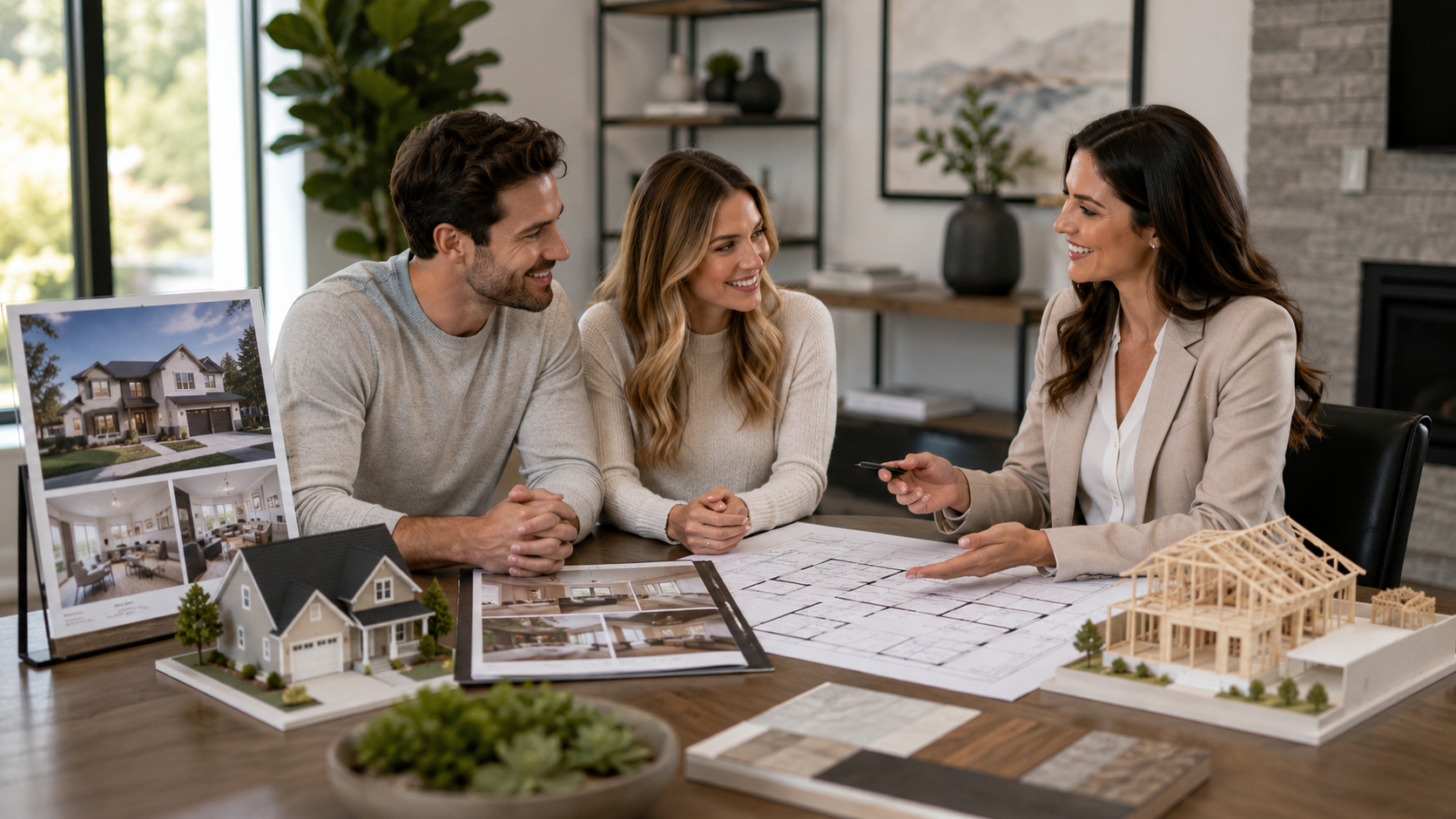
One of the biggest decisions buyers face is whether to buy an existing home or build a new one.
At first, building can sound like the perfect solution.
You get the layout you want. You choose the finishes. You avoid some of the issues that come with older homes. You may get modern systems, better energy efficiency, and a home that feels more customized to your life.
But building is not always simple.
It can take longer. It can cost more than expected. It can involve land, permits, utilities, driveway costs, site work, builder contracts, construction loans, selections, delays, and a lot of decisions.
Buying an existing home is usually faster and more straightforward, but it may require compromise. The home may not have the exact layout, finishes, acreage, garage, or location you originally wanted.
So which option is better?
The honest answer is: it depends on your timeline, budget, goals, flexibility, and risk tolerance.
Let’s break down what you need to know.
Buying an Existing Home
Buying an existing home means purchasing a home that is already built.
This may include:
Older homes
Move-in-ready homes
Updated homes
Fixer-uppers
Townhomes
Ranchers
Colonials
Split-levels
Rural properties
Homes with public utilities
Homes with well and septic
Newer resale homes
Recently built homes that already had a previous owner
For most buyers, this is the more common path.
You find a home, make an offer, complete inspections, work through financing, and close. The timeline is usually much shorter than building from scratch.
Benefits of Buying an Existing Home
Buying an existing home can be a great option for many buyers.
Here are some of the biggest benefits.
1. Faster Timeline
One of the biggest advantages of buying an existing home is speed.
If the home is already built and both sides are ready, a financed purchase may often close in about 30 to 45 days, depending on the loan, title work, appraisal, inspections, and contract terms.
That is much faster than building from scratch.
If you need to move because of a lease, job change, school schedule, family situation, or sale of another home, buying may be the more practical path.
Building can take months or longer depending on land, permits, weather, builder schedule, utility availability, and construction progress.
2. You Can See Exactly What You Are Buying
With an existing home, you can walk through the property.
You can see the layout, room sizes, basement, yard, driveway, neighborhood, natural light, storage, finishes, and overall condition.
You can inspect the home before settlement.
You can compare it to other homes that have sold.
There is still risk, but you are not relying only on plans, renderings, samples, or future promises.
You can physically stand in the home and decide whether it works.
3. Established Neighborhoods and Locations
Existing homes are often in established neighborhoods or known rural areas.
That can make it easier to evaluate:
Neighborhood feel
Commute
Road noise
School district
Nearby homes
Property taxes
Yard size
Mature trees
Resale history
Nearby amenities
Utility setup
Actual traffic patterns
When building in a newer development or on raw land, some of these things may be harder to judge upfront.
4. More Predictable Costs
Buying an existing home can be more predictable than building.
You know the purchase price.
You can estimate closing costs.
You can inspect the property.
You can review property taxes and insurance.
You can evaluate repairs before closing.
That does not mean there will be no surprises, but the cost structure is usually clearer than building.
With building, costs can change based on site work, material pricing, labor, selections, upgrades, utility connections, permit requirements, driveway costs, grading, septic, well, stormwater management, and other items.
5. More Room to Negotiate
Depending on the market, an existing home may allow for negotiation.
You may be able to negotiate:
Price
Seller assist
Settlement date
Repairs
Credits
Included appliances
Inspection terms
Rent-back terms
Other contract items
With builders, negotiation may be different.
Some builders are firm on base price but may offer incentives, closing cost assistance, upgrades, rate buydowns, or other promotions.
The negotiation structure is different, so buyers need to understand the difference.
Downsides of Buying an Existing Home
Buying an existing home also has tradeoffs.
1. You May Need to Compromise
No home is perfect.
An existing home may not have the exact layout, finishes, garage, lot size, kitchen, bathroom, basement, or location you originally wanted.
You may have to decide what matters most.
For example, you may find a home in the right location but with dated finishes.
Or you may find the right layout but not the perfect yard.
Or you may find a great house that needs a new roof in the next few years.
Buying often requires compromise.
2. Older Systems and Maintenance
Existing homes may have older systems.
That could include:
Roof
HVAC
Water heater
Windows
Electrical
Plumbing
Septic system
Well system
Appliances
Foundation or basement components
This does not mean the home is bad.
But buyers need to understand the condition and likely future costs.
A home inspection can help, but buyers should also plan for maintenance after closing.
3. Renovation Costs
Some buyers purchase an existing home with the idea that they will update it later.
That can be a smart strategy, but renovations cost money.
Paint and flooring may be manageable.
Major kitchen remodels, bathroom remodels, roof replacement, HVAC replacement, window replacement, septic work, basement waterproofing, or structural repairs can get expensive quickly.
Before buying a home that needs updates, think through what you can afford now versus what can wait.
Building a New Home
Building a home usually means purchasing land or a lot and working with a builder to construct a new home.
This may involve:
Choosing land
Reviewing zoning
Confirming utilities
Designing or selecting a floor plan
Choosing finishes
Getting permits
Preparing the site
Financing construction
Managing timelines
Completing inspections
Final walkthrough
Closing or converting the construction loan
There are different types of new construction.
Some buyers build a fully custom home.
Some choose a semi-custom builder.
Some buy in a development where the builder already owns the lots.
Some buy a spec home that is already under construction or nearly finished.
These are not all the same.
Benefits of Building a Home
Building can be a great option for the right buyer.
1. Customization
The biggest benefit of building is customization.
Depending on the builder and type of build, you may be able to choose:
Floor plan
Exterior style
Kitchen layout
Cabinets
Countertops
Flooring
Lighting
Paint colors
Bathroom finishes
Garage size
Basement options
Energy-efficient features
Smart home features
Lot placement
Outdoor living spaces
For buyers who have a very specific vision, building can be appealing.
Instead of trying to find a home that checks every box, you may be able to create the home you want.
2. Newer Systems and Materials
A new home usually comes with new systems, materials, and construction.
That may include:
New roof
New HVAC
New electrical
New plumbing
New appliances
New windows
New insulation
New siding
New flooring
Modern building standards
This can reduce the likelihood of major near-term maintenance compared to some older homes.
It does not mean nothing will ever go wrong.
New homes can still have issues.
But you are starting with new systems instead of inheriting years of wear and tear.
3. Energy Efficiency
Newer homes may be more energy efficient than older homes.
Depending on the builder, materials, insulation, windows, HVAC system, and design, a new home may offer better efficiency and lower utility costs than an older property.
This can matter over time.
However, buyers should not assume every new home is automatically highly efficient.
Ask the builder about insulation, HVAC, windows, appliances, energy features, and utility expectations.
4. Less Immediate Renovation
When you build, you usually do not need to move in and immediately start renovating.
You chose the finishes.
The flooring is new.
The kitchen is new.
The bathrooms are new.
The systems are new.
For buyers who do not want projects, this can be a major advantage.
5. Builder Warranty
Many new homes include some form of builder warranty.
The details vary by builder and contract.
A warranty may provide coverage for certain workmanship, materials, systems, or structural items for a defined period of time.
Buyers should read the warranty carefully.
Understand what is covered, what is excluded, how claims are handled, and how long each part of the warranty lasts.
Downsides of Building a Home
Building can be rewarding, but it also comes with real challenges.
1. Longer Timeline
Building usually takes longer than buying an existing home.
The timeline can be affected by:
Lot availability
Permits
Weather
Builder schedule
Material delays
Labor availability
Utility connections
Septic approval
Well drilling
Site work
Inspections
Change orders
Financing requirements
If you need to move quickly, building from scratch may not be the best option.
A quick-delivery or spec home may be a better middle ground if you want something newer but cannot wait through a full build process.
2. Cost Overruns
Building can come with unexpected costs.
Even with a strong budget, costs can change.
Possible added costs may include:
Site clearing
Excavation
Driveway
Grading
Stormwater requirements
Septic system
Well
Utility extensions
Rock removal
Permit fees
Engineering
Change orders
Material upgrades
Finish selections
Landscaping
Decks, patios, or porches
Window treatments
Appliances not included
Mailbox, sidewalks, or other requirements
This is one of the biggest reasons buyers need to understand what is included and what is not included.
The base price is not always the final price.
3. Land Can Be Complicated
Buying land to build on is not the same as buying a finished home.
Before buying land, you need to understand:
Zoning
Permitted use
Setbacks
Soil testing
Septic perc approval
Well availability
Public water or sewer availability
Driveway access
Road frontage
Easements
Stormwater requirements
Topography
Deed restrictions
HOA or development rules
Utility access
Builder restrictions
Flood zones
Environmental concerns
A piece of land may look perfect, but that does not mean it is buildable in the way you want.
Never buy land assuming you can build exactly what you want without verifying the details first.
4. Construction Financing Can Be Different
Financing a build can be different from financing an existing home.
Depending on the builder and structure, you may need:
A construction loan
A construction-to-permanent loan
Land financing
Larger down payment
Builder deposit
Draw schedule
Interest-only payments during construction
Final conversion to a permanent mortgage
Appraisal based on plans and specs
Some builders handle financing differently than others.
Some production builders may have preferred lenders.
Some custom builds require more complex financing.
Talk with a lender early.
Do not assume the financing will work the same way as buying an existing house.
5. Decision Fatigue
Building sounds fun until you realize how many decisions need to be made.
You may need to choose:
Floor plan
Elevation
Siding
Roofing
Windows
Exterior colors
Cabinets
Counters
Hardware
Flooring
Tile
Fixtures
Lighting
Paint
Appliances
Doors
Trim
Plumbing fixtures
Electrical locations
Landscaping
Driveway material
Some buyers love this.
Others find it overwhelming.
Every decision can affect cost, timeline, and final result.
6. The Final Product May Feel Different Than Expected
Plans and renderings can be helpful, but they are not the same as walking through a completed home.
Room sizes may feel different in person.
Natural light may feel different.
Lot slope may affect the yard.
Neighboring homes may be closer than expected.
Finish selections may look different once installed.
This is why buyers should review plans carefully, visit model homes when possible, walk similar floor plans, and ask detailed questions.
Buying New Construction From a Builder
There is another category between buying existing and fully building from scratch: buying new construction from a builder.
This may include:
Spec homes
Quick-delivery homes
Homes already under construction
New homes in planned communities
Semi-custom homes
Builder-owned lots
This can be a good option for buyers who want something new but do not want to manage every part of a custom build.
However, buyers still need to be careful.
Builder contracts are often written differently than standard resale contracts.
The builder’s sales representative works for the builder.
That does not mean they are bad or dishonest.
It means buyers should understand who represents them.
Having your own agent involved early can help you ask better questions, compare pricing, review incentives, understand timelines, and protect your interests during the process.
Should You Use a Realtor When Building?
Yes, it can be helpful to have your own Realtor involved when buying new construction or building.
A Realtor can help you:
Compare builders
Understand lot options
Review market value
Evaluate resale potential
Ask about included features
Understand upgrade pricing
Compare incentives
Review contract terms
Discuss inspection options
Track deadlines
Understand the local market
Think through future resale
One important note: if you want your Realtor involved, they usually need to be included from the beginning.
Do not visit a builder, register, or start conversations assuming you can bring your agent in later.
Builder policies vary, and your agent may need to accompany you or be registered at the first visit.
Ask before going.
Questions to Ask Before Buying an Existing Home
If you are leaning toward buying, ask:
How quickly do I need to move?
What homes are available in my price range?
Am I comfortable making updates over time?
How important is location?
Can I handle older systems?
What did the inspection show?
What repairs are needed immediately?
What repairs can wait?
What is the home’s resale potential?
Does the monthly payment fit my budget?
How does this home compare to recent sales?
Buying may be the better option if you want a faster move, more certainty, an established location, and a clearer cost structure.
Questions to Ask Before Building
If you are leaning toward building, ask:
Do I have the patience for a longer timeline?
Do I understand the total budget?
Is land included or separate?
Are utilities included?
Are well and septic included?
What permits are needed?
What site work is included?
What finishes are included in the base price?
What upgrades cost extra?
What happens if material costs change?
What is the builder’s timeline?
What warranties are included?
How are change orders handled?
What inspections are allowed?
How does financing work?
What happens if the build is delayed?
What is the resale value of the finished home?
Building may be the better option if customization, new systems, and long-term fit matter more than speed and cost certainty.
Cost: Buying vs Building
Cost is one of the biggest questions.
Is it cheaper to buy or build?
There is no universal answer.
In many cases, buying an existing home may be less expensive upfront, especially when land, site work, utilities, and upgrades are factored into building.
But building may offer value if you plan to stay long term, want a specific layout, want newer systems, and are willing to pay for customization.
When comparing cost, do not only compare the purchase price.
Compare:
Land cost
Construction cost
Site work
Utility costs
Septic and well
Permits
Driveway
Landscaping
Builder upgrades
Closing costs
Interest during construction
Temporary housing
Moving costs
Repairs on existing homes
Renovation costs
Long-term maintenance
Resale value
The cheapest option upfront is not always the best long-term decision.
Timeline: Buying vs Building
Timeline may be the deciding factor.
Buying may be better if:
You need to move soon
Your lease is ending
You are relocating
You are selling another home
You want certainty
You need to be in a school district by a certain date
You do not want to wait through construction
Building may be better if:
You have time
You are not in a rush
You have temporary housing
You want a specific home design
You are comfortable with delays
You want new construction more than speed
Be honest about your timeline.
A dream home that takes too long may not work for your life right now.
Location: Buying vs Building
Location matters in both options.
With buying, you may have access to established neighborhoods, mature lots, and areas where new construction is limited.
With building, you may need to find available land or a builder community that fits your budget and goals.
In some areas, land may be limited.
In others, land may exist but require expensive site work, long driveways, wells, septic systems, or utility extensions.
Do not assume building gives you more location flexibility.
Sometimes it does.
Sometimes buying existing gives you better access to the location you actually want.
Customization vs Convenience
This is one of the clearest tradeoffs.
Building gives you more customization.
Buying gives you more convenience.
If you build, you may get closer to your ideal layout and finishes.
If you buy, you may move sooner and avoid months of construction decisions.
Ask yourself which matters more.
Do you want to choose every detail?
Or do you want to find something that works and start living in it sooner?
There is no wrong answer.
But there is usually a better answer for your personality, timeline, and budget.
Resale Value Matters
Even if you are building your dream home, think about resale.
Life changes.
Jobs change.
Family needs change.
Markets change.
When building, be careful with highly specific choices that may hurt future resale.
That could include unusual layouts, overbuilding for the area, extremely personal finishes, limited bedroom count, awkward garages, or expensive upgrades that future buyers may not value.
When buying existing, resale still matters too.
Think about location, school district, condition, layout, lot, bedroom count, parking, and future buyer demand.
A home should work for you.
But it should also make sense if you need to sell later.
Inspections Still Matter With New Construction
Some buyers assume new construction does not need inspections.
That is a mistake.
New homes can have issues too.
Construction involves many trades, schedules, materials, and details. Mistakes can happen.
Buyers may want to consider inspections at different points, such as:
Pre-drywall inspection
Final inspection before closing
Warranty inspection before the builder warranty expires
Ask the builder what inspections are allowed and when they can occur.
A new home does not automatically mean a perfect home.
Common Mistakes Buyers Make
Here are common mistakes buyers make when comparing buying and building:
Comparing base build price to finished resale price.
Forgetting about land, site work, utilities, and permits.
Assuming building will be cheaper.
Assuming existing homes are always better deals.
Not understanding construction financing.
Visiting builders without involving their Realtor upfront.
Underestimating timeline delays.
Ignoring resale value.
Not budgeting for upgrades.
Skipping inspections on new construction.
Buying land without confirming buildability.
Letting emotions override the numbers.
Most mistakes come from not understanding the full picture.
When Buying May Be the Better Choice
Buying may be better if:
You need to move sooner
You want more predictable costs
You prefer an established neighborhood
You want to see the exact home before buying
You are comfortable with some compromises
You do not want to manage construction decisions
You want to negotiate with an individual seller
You want a clearer closing timeline
You found a home that fits most of your needs
For many buyers, buying existing is the practical choice.
When Building May Be the Better Choice
Building may be better if:
You have time
You want customization
You have a clear budget
You understand the risks
You found the right land or builder community
You are comfortable making many decisions
You want new systems and materials
You plan to stay long term
You are prepared for delays and possible added costs
You have the right builder, lender, and agent helping you
Building can be a great choice when the buyer is prepared and realistic.
Final Thoughts
Buying and building can both be great paths.
Buying is usually faster, more predictable, and easier to evaluate upfront.
Building can offer customization, new systems, modern features, and a home designed around your life.
But building also comes with more variables.
Land, permits, financing, site work, utilities, builder contracts, upgrades, delays, and cost changes all matter.
The right choice depends on your goals, budget, timeline, and comfort level.
Do not choose based only on the dream.
Choose based on the full picture.
Thinking About Buying or Building?
If you are deciding between buying an existing home, purchasing new construction, or building on land in Hanover, York County, Adams County, Carroll County, or the surrounding areas, our team can help you compare the options.
We can help you review resale homes, evaluate new construction opportunities, ask better builder questions, understand land concerns, and connect with trusted local lenders and professionals.
The goal is not just to find a house.
The goal is to make the right move for your life, your budget, and your future.
Check out this article next